
Germany Work Visa 2026: Eligibility, Jobs & Application Guide | Renation Advisors

Germany is becoming an increasingly attractive destination for skilled professionals seeking international career opportunities and long-term growth. With opportunities in IT, engineering, healthcare, skilled trades and other specialised sectors, Germany offers multiple pathways for qualified foreign workers.
But which Germany Work Visa route is right for you? Do you need a job offer? Can you move to Germany without a job? Is the Opportunity Card suitable for your profile? And how does a German work visa potentially lead to long-term residence?
In this guide, we explain the Germany Work Visa 2026 process in simple terms, including eligibility, job opportunities, required documents, application options, job-search pathways and common questions about working and settling in Germany.
With Renation Advisors, applicants can get professional assistance with profile assessment, documentation, visa application guidance and end-to-end immigration support, helping make the process more structured and easier to understand.
Germany Work Visa 2026: How to Work in Germany, Get a Job & Build Your Future
If you've been thinking about moving abroad for work, Germany has probably come up in your search more than once — and for good reason. The country is short on skilled workers across IT, engineering, healthcare, and the trades, and it's opened up several new pathways to make it easier for people to come in and fill those gaps.
But let's be honest — a Germany Work Visa in 2026 isn't a "fill out a form and you're done" kind of process. What you qualify for depends on your degree, your work experience, whether you already have a job lined up, your salary, and which visa route actually fits your situation.
The upside? Germany has made things a bit more flexible lately, including options for people who want to move first and find a job once they're there. So whether you've already got an offer in hand or you're still figuring things out, the first real step is understanding which route is actually meant for you.
What exactly is a German Work Visa?
In simple terms, it's the national visa or residence permit that lets non-EU citizens come to Germany and legally work. If you're planning to stay long-term, you'll need a residence title that specifically allows employment — not just any travel visa.
Depending on your background, you might fall into one of these categories:
- Skilled worker employment visa
- EU Blue Card
- Visa for professionally qualified workers
- IT-specific and other specialised employment routes
- Opportunity Card (Chancenkarte) for job hunting
- Recognition-based employment pathway
- Vocational training visa
Which one applies to you really comes down to your qualifications and personal circumstances — there's no one-size-fits-all answer here.
Why Are So Many Professionals Eyeing Germany Right Now?
Germany runs on a strong industrial and tech-driven economy, and it genuinely needs international talent to keep up. If you're looking at Work in Germany as an option, here's where the demand is concentrated:
- IT & Technology — software development, data roles, cybersecurity, and more
- Engineering — mechanical, electrical, automotive, and technical fields
- Healthcare — nursing and other medical professions
- Skilled Trades — a wide range of vocational and technical occupations
- Science & Research — specialist academic and research positions
Germany has also widened its immigration framework over the past couple of years specifically to make it less painful for qualified workers from outside the EU to break into the job market.
So, How Do You Actually Get a Work Visa for Germany?
Start by figuring out which route fits you.
If you already have a job offer from a German employer, you'll likely apply through an employment-based visa — and depending on your qualifications and salary, that could mean an EU Blue Card or another skilled-worker route.
No job offer yet? That's where the Opportunity Card becomes worth looking into. It's built for people who want to enter Germany specifically to search for work.
Here's roughly what the journey tends to look like:
- Check whether you're eligible in the first place
- Pin down the correct visa category
- Look into whether your qualifications need formal recognition
- Line up a job, if your route requires one
- Gather your documents
- Submit your application
- Attend your biometrics appointment and hand over original documents if asked
- Wait it out for a decision
- Travel to Germany once approved
- Sort out your residence formalities after arrival
Germany's Foreign Office is pretty clear that you generally need to apply for the right residence visa before you land in the country, with a handful of nationality-based exceptions.
Can You Move to Germany Without a Job Offer Already Lined Up?
Yes — and this genuinely surprises a lot of people.
The Opportunity Card exists exactly for this situation: it lets eligible applicants come to Germany to look for work rather than requiring a signed contract before you even board a flight. That said, it's not a free pass — you still have to meet the eligibility rules that come with it.
This is honestly one of the things that sets Germany apart from countries where you're expected to have everything locked in before you even apply.
How to Get a Germany Work Visa Without a Job Offer
If you don't have an offer yet, it's worth checking whether you qualify for the Opportunity Card or another job-search route. Your eligibility usually comes down to a mix of:
- Your educational or professional qualifications
- Whether those qualifications are recognised in Germany
- Your professional experience
- Language ability
- Proof you can financially support yourself
- Any other requirements tied to that specific route
Having no job offer doesn't automatically shut the door — but having a degree alone doesn't guarantee entry either. Your whole profile gets weighed against the rules.
Is It Actually Hard to Get a German Work Visa?
For someone with the right qualifications, a solid job offer, and complete paperwork, it can go fairly smoothly. But it's not automatic for anyone.
Where people tend to get stuck:
- Getting their qualifications formally recognised
- Finding an employer willing to sponsor them
- Meeting the minimum salary thresholds
- Getting documentation right the first time
- Proving enough professional experience
- German-language requirements for certain jobs
- Simply figuring out which visa category even applies to them
If you're in a regulated profession, qualification recognition tends to matter even more. Germany's Federal Foreign Office recommends checking recognition requirements early, before you get too far into the process.
Can You Apply for a German Work Visa Online in 2026?
In many cases, yes — and this is one of the bigger improvements for applicants this year.
Germany's Consular Services Portal now lets people submit long-term visa applications online, including for employment, study, vocational training, and family reunification.
That said, "online" doesn't mean "fully remote." You'll usually still need to show up in person for:
- Biometrics
- Fingerprints and your photo
- Verification of your original documents
- Paying the visa fee
The portal is still useful though — it lets you do preliminary checks and track where your application actually stands.
Can You Get a 1-Year Germany Work Visa?
Maybe — but there's no fixed "everyone gets one year" rule. The actual validity depends on things like:
- Your employment contract
- The type of residence title you're granted
- Whether you're on a job-search route
- Your qualifications and salary
- Your nationality
- The individual decision made on your case
So instead of assuming a standard duration, it's better to look up what applies to your specific visa category.
Can You Get German PR in 2 Years?
Don't count on it as a guarantee. Germany has multiple permanent residence pathways, and how long it takes depends on your residence permit type, work history, pension contributions, language skills, and how well you've integrated, among other things.
Some highly qualified workers do have faster tracks under certain conditions, but treating "PR in 2 years" as a given isn't realistic for most people. It really comes down to your specific category.
Is It Easy to Land a Job in Germany?
There's no single answer here — it depends heavily on you. Your odds improve if you have:
- A qualification that's genuinely in demand
- Relevant, provable work experience
- Strong technical skills
- Decent English and/or German
- A qualification that's already recognised in Germany
- A profession employers are actively hiring for
Even with all that, you'll still need a strong CV, well-targeted applications, and to actually perform in interviews. And here's a tip that gets underrated a lot: learning German — even at a basic level — tends to open more doors, even for jobs advertised in English.
Can You Move to Germany With No Job at All?
In certain situations, yes. Germany's newer pathways, especially the Opportunity Card, are built for exactly this — letting qualified people come in and search for work instead of needing a job locked in beforehand.
You'll still need to meet the eligibility conditions and prove you can support yourself financially while you search, but it's a real option, not just a technicality.
What Documents Do You Actually Need for a Germany Work Visa?
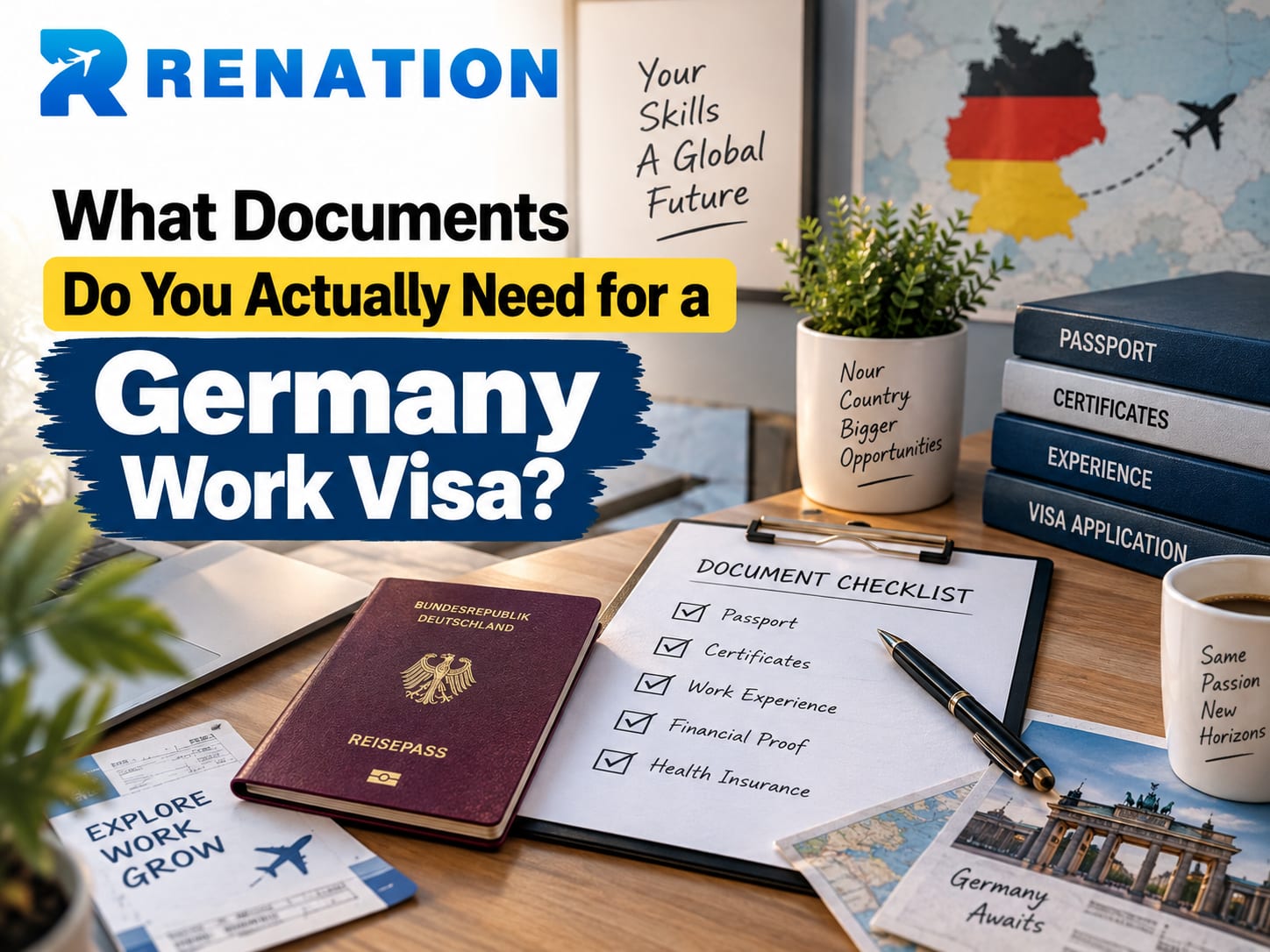
This varies depending on your visa category and personal situation, but generally you'll be asked for:
- A valid passport
- Your visa application form
- Passport-sized photographs
- Educational certificates
- Qualification-recognition documents, if applicable
- Your employment contract or job offer, where required
- An up-to-date CV
- Proof of professional experience
- Proof of accommodation, if required
- Proof of financial resources, if applicable
- Health insurance
- Language certificates, where relevant
- Anything else the specific German mission asks for
It's worth double-checking with the German mission handling your region, since requirements can shift a bit depending on where you're applying from.
Germany Work Visa 2026: Which Route Fits You?
There's no single "Germany Work Visa" — it really depends on where you stand right now.
Your Situation | Likely Route |
You already have a qualifying job offer | Skilled Worker / Employment Visa |
Highly qualified with a strong salary offer | EU Blue Card |
Qualified, but no job yet | Opportunity Card may work |
Your qualification needs recognition first | Recognition-based route |
You're interested in vocational training | Ausbildung route |
You're a specialist in IT | Specific IT/skilled-worker pathways |
Your best fit depends on your qualifications, occupation, experience, and personal circumstances.
Germany Work Visa for Indians
If you're applying for a Germany Work Visa for Indians, the process runs on the same core routes described above, but a few extra things tend to come up in practice — getting Indian degrees formally recognised, showing clear salary offers that meet the German thresholds, and applying through the correct VFS Global or consular channel for your region. Demand for Indian IT professionals, engineers, and healthcare workers remains high, which is part of why Germany Jobs for Indians has become such a common search these days. If you're an Indian applicant, it's worth checking recognition requirements early, since that step tends to take the longest.
A Quick Word on Germany Work Permit vs Work Visa
People often use "Germany Work Permit" and "work visa" interchangeably, but they're technically two different things. The visa is what gets you into the country; the work permit (built into your residence title) is what actually authorises you to be employed once you're there. When people search for Germany Work Permit 2026, they're usually really asking about the residence permit tied to their visa category — so it helps to think of the two as steps in the same process rather than separate applications.
Frequently Asked Questions About the Germany Work Visa
How do I get a work visa for Germany?
Figure out which employment or skilled-worker route fits you, meet its requirements, get your documents together, and apply through the responsible German mission or the Consular Services Portal.
Is it difficult to get a German work visa?
It depends on your profile. Someone with a solid job offer, recognised qualifications, and complete documents will generally have an easier time than someone with unclear qualifications or an unsuitable job offer.
How do I get a Germany work visa without a job offer?
Look into the Opportunity Card or another job-search route — these are built for people who want to search for work once they're in Germany.
Can I get a 1-year work visa for Germany?
It's possible in some cases, but there's no universal one-year rule. It depends on your visa category and personal situation.
Can I get German PR in 2 years?
Not automatically. It depends on your residence category, work history, and other legal requirements. Some highly qualified workers may qualify faster, but it's not guaranteed.
Can I get a job easily in Germany?
It depends on your profession, experience, qualifications, and language skills. In-demand skills genuinely improve your chances.
Can I apply for a German work visa online in 2026?
Yes, many long-term applications — including employment ones — can be started through the Consular Services Portal, though you'll likely still need an in-person appointment for biometrics.
Can I move to Germany with no job?
Potentially, yes, through routes like the Opportunity Card — as long as you meet the eligibility requirements.
Ready to Start Your Germany Work Visa Journey?

Germany genuinely has a lot to offer international professionals right now, but picking the right immigration pathway matters just as much as landing the job itself. Before you apply, take a real look at your education, experience, language skills, finances, and whether your qualifications need recognition.
Renation Advisors can help you make sense of your Germany Visa for Work options, review your profile honestly, and walk you through the paperwork and application from start to finish.
Your Germany career could start with the right pathway. 🇩🇪
— Renation Advisors
Immigration rules and requirements can change without much notice. Always double-check current requirements with official German authorities before submitting an application.
Conclusion
A career in Germany can open the door to international work experience, professional growth and new long-term opportunities. Whether you already have a German job offer or are exploring options such as the Opportunity Card, choosing the correct immigration pathway is essential.
At Renation Advisors, we help aspiring professionals understand their Germany Work Visa options based on their education, work experience, occupation and career goals. Our support can include eligibility assessment, document preparation, application guidance and end-to-end visa assistance.
If Germany is your next career destination, don't rely on assumptions or misleading “guaranteed visa” claims. Get your profile assessed, understand your options and take your next step with Renation Advisors.
Leave a Comment
Your email address will not be published. Required fields are marked *