
Germany Tourist Visa 2026: Requirements, Documents, Fees & Step-by-Step Application Guide

Planning a trip to Germany from India? From Berlin and Munich to the Black Forest and Bavarian castles, Germany has plenty to explore. But before you book your trip, you’ll need to understand the Germany Tourist Visa process. This guide covers the key requirements, documents, financial proof, application steps, and tips Indian travellers should know before applying.
Tourist Visa in Germany: A Simple Guide for Indian Travellers
Thinking of a holiday in Germany? Between Berlin's buzzing streets, Munich's beer halls, the Black Forest's quiet beauty, and those fairy-tale Bavarian castles, it's easy to see why so many Indian travellers put Germany on their list. But before you start packing, there's one thing to sort out first: your Tourist Visa for Germany.
A lot of people find the visa process confusing. How much money do you need to show? Is travel insurance compulsory? What actually happens at the visa appointment? This guide walks you through all of it in plain language — documents, costs, common mistakes, and how to give your application the best shot.
What Exactly Is a Germany Tourist Visa?
If you're an Indian citizen heading to Germany for a short trip, you'll need what's officially called a Schengen short-stay visa. Don't let the name confuse you — in everyday terms, this is your Tourist Visa or Visitor Visa, and it covers things like:
- Holidays and sightseeing
- Visiting family or friends
- Short cultural trips
- Attending events or conferences
- Certain short business visits
Once granted, it generally lets you stay in the Schengen zone for up to 90 days within any 180-day window — though the exact terms depend on what's stamped on your visa.
The type of visa that's right for you really comes down to why you're travelling, how long you plan to stay, and your overall travel plan.
Who Can Apply?
Pretty much anyone can apply, as long as you can show:
- A genuine reason for the trip
- Enough money to cover your expenses
- A place to stay
- Valid travel medical insurance
- A clear itinerary
- Good reason to come back home to India
- Documents that all tell the same, consistent story
The visa officer isn't just ticking boxes on one document — they're looking at your whole profile: your job, your finances, and whether your story adds up.
Applying Step by Step
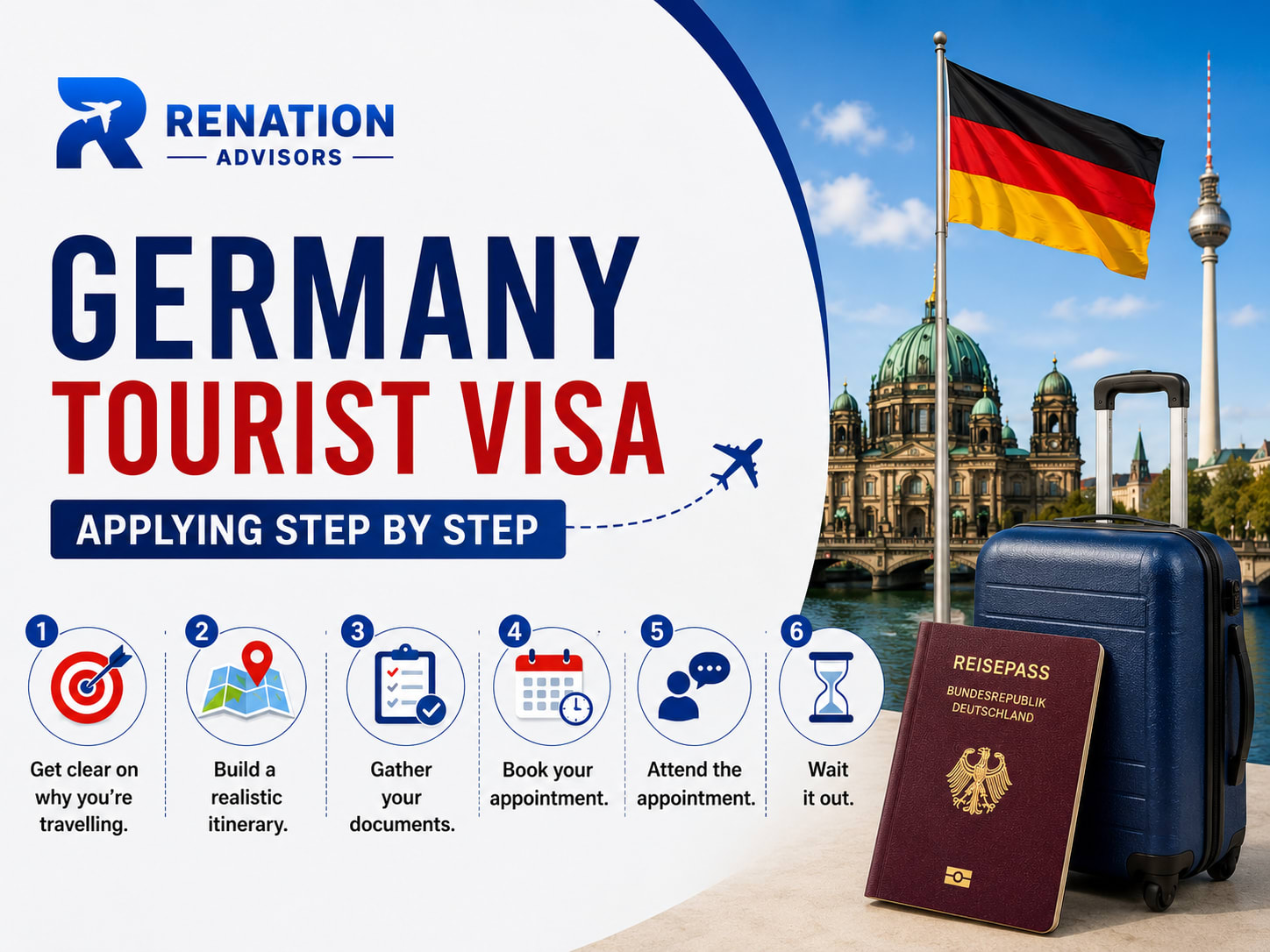
Step 1: Get clear on why you're travelling. Is it a holiday, a multi-city tour, a family visit? Say it clearly — a vague purpose just invites more questions.
Step 2: Build a realistic itinerary. Include your travel dates, the cities you'll visit, where you'll stay, and how you'll get back home. You don't need to cram in ten cities — a simple, believable plan works better than an overloaded one.
Step 3: Gather your documents. More on this below, but everything should line up and tell one consistent story.
Step 4: Book your appointment. Slots at the visa centre can fill up fast, so don't leave this to the last minute.
Step 5: Attend the appointment. You'll submit your documents and biometrics, and you might be asked about your job, your finances, your travel plans, and why you'll return to India. Answer honestly and stay calm.
Step 6: Wait it out. Processing time varies depending on the season, how busy the consulate is, and your individual case.
Documents You'll Likely Need
- A valid passport — check it meets the validity and blank-page rules before you apply.
- A correctly filled application form — your dates and details need to match your other documents exactly.
- Passport-size photos that meet the Schengen photo specifications.
- Proof of accommodation — hotel bookings or other stay arrangements that match your itinerary.
- Travel medical insurance covering your whole trip, as required for Schengen visas.
- Proof you can afford the trip — bank statements, salary slips, or business income records.
- Proof of your job or business — an employment letter, leave approval, or business registration papers.
- Proof of ties to India — your job, business, family, or property that shows you'll be heading back home.
So, How Much Money Do You Actually Need to Show?
This is probably the most common question people ask, and honestly, there's no magic number. What matters is that your funds realistically cover your accommodation, food, local travel, sightseeing, and your flight home.
What visa officers really care about is whether your financial story makes sense — that your bank statements match your income and lifestyle. A random large deposit right before you apply, with no explanation, can raise more questions than it answers.
How Long Does It Take?
There's no fixed timeline. It depends on the time of year, how many applications the consulate is handling, and your own case. The safest bet is to apply well ahead of your travel dates so you have breathing room if they ask for extra documents.
Why Applications Get Refused
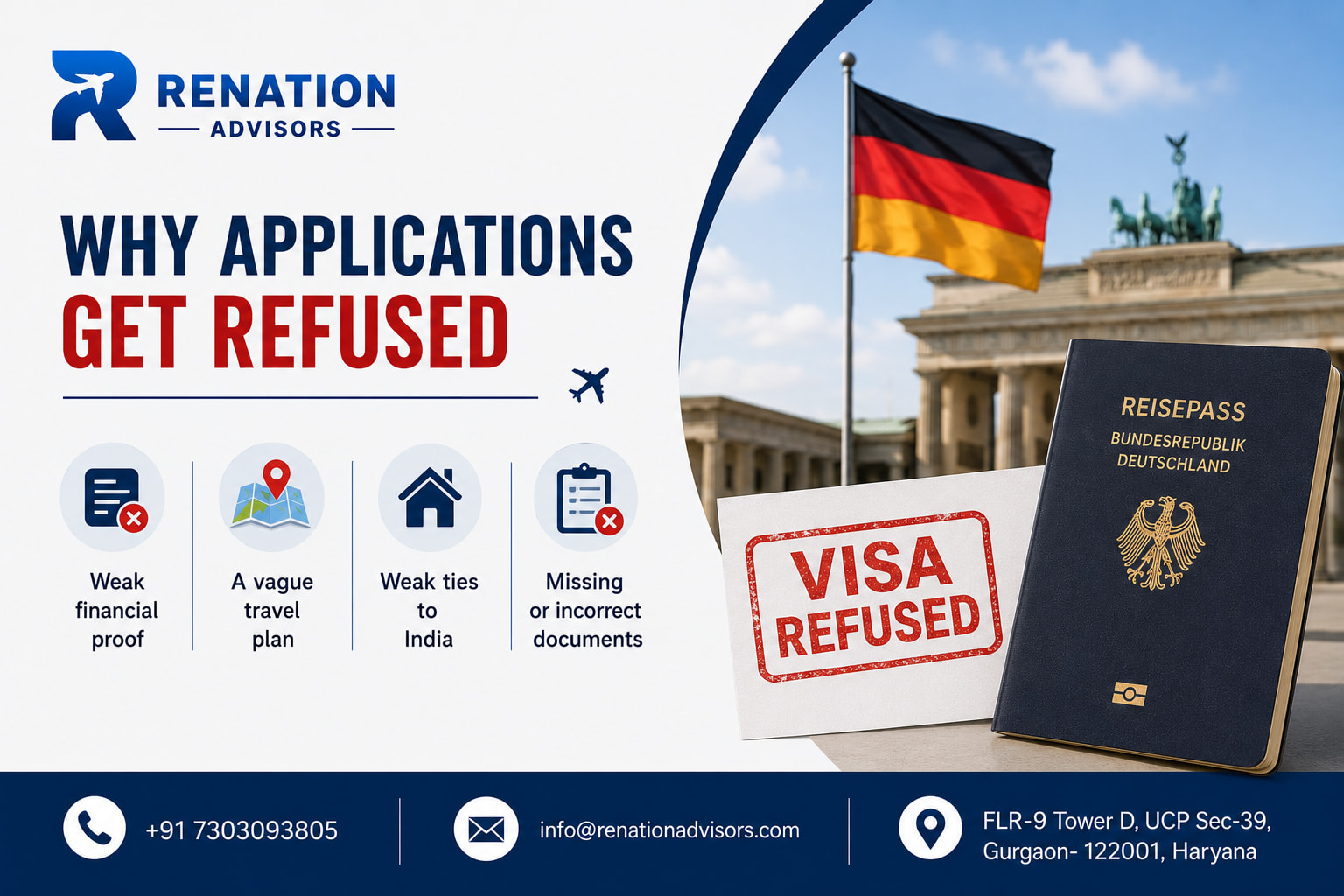
A few common reasons visas get turned down:
- Weak financial proof — your bank balance doesn't clearly support the trip
- A vague travel plan — hard to tell what you're actually doing there
- Weak ties to India — not enough to convince them you'll return
- Mismatched information — your form, bank statements, and interview answers don't line up
- Missing documents
- Unexplained money movements in your bank account
Tips to Strengthen Your Application
- Keep your itinerary realistic and matched to your budget
- Let your bank statements reflect your actual financial life — don't dress them up
- Double-check every document is complete and current
- Be upfront about who you are, why you're travelling, how you'll pay for it, where you'll stay, and why you'll come home
- Never submit fake documents or false information — a genuine, transparent application is always the safer route
Planning to Visit More Than One European Country?
If Germany is your main stop, your application should reflect that clearly. Once your visa is approved, it generally lets you travel to other Schengen countries too — but your actual travel should match what you told them at the time of applying. Don't apply with one story and then travel a completely different route.
Can You Work in Germany on a Tourist Visa?
No — a Tourist Visa is meant for short visits, not employment. If your real goal is to work in Germany, you're looking at a different route altogether, such as a Work Visa, Job Seeker Visa Germany, or a Job Search Visa Germany, depending on your situation and qualifications.
Some people plan to first travel on a Job Seeker Visa to look for work on the ground, then move to a Work Visa once they've landed a job. Others are exploring longer-term goals like a Study Visa to pursue education in Germany, or eventually a PR Visa if permanent settlement is the plan. Each of these is a separate process with its own requirements — a Tourist Visa can't simply be "converted" into any of them. If your long-term goal is to live, study, or work in Germany, it's worth mapping out the right pathway from the start rather than hoping a tourist trip will lead there.
Quick Answers to Common Questions
Is it easy to get a Germany tourist visa? There's no guaranteed approval — it depends on your documents, finances, and overall profile.
Can I apply if I don't have a job? Yes, but you'll need to show a genuine travel purpose, enough funds, and solid reasons to return home.
Is there an interview? You'll attend an appointment for document submission and biometrics, and you may be asked a few questions.
Can students apply? Yes — with the right documents and a clear reason to return after the trip.
Can self-employed people apply? Yes, using business and financial records to support the application.
How early should I apply? As early as you can — appointment slots and processing times can vary a lot.
Do I need travel insurance? Yes, it's a standard requirement for Schengen visas.
What if I've never travelled abroad before? That's fine. Focus on making your application genuine and well-documented instead.
What if my visa gets refused? Look closely at the refusal reasons before deciding your next move.
How Renation Advisors Can Help

Renation Advisors is an immigration and education consultancy based in Gurgaon, helping people plan international travel, study, work, and immigration. Whether you need a straightforward Visitor Visa for a holiday, a Job Seeker Visa Germany to explore work opportunities, a Study Visa for higher education, a Work Visa once you've secured a job, or you're thinking further ahead about a PR Visa, our team can guide you through:
- Building your travel or immigration profile
- Sorting out documentation
- Preparing financial proof
- Planning your itinerary
- Getting accommodation documents in order
- Avoiding common paperwork mistakes
- Understanding the full application process
We don't believe in one-size-fits-all advice — our guidance is based on your specific situation.
📞 Phone/WhatsApp: +91 7303093805 📧 Email: info@renationadvisors.com 📍 Office: FLR-9 Tower D, UCP Sec-39, Gurgaon-122001, Haryana
Conclusion
A Germany trip takes more than a flight booking and a filled-out form. A strong application paints a clear, honest picture — of your travel purpose, your finances, your accommodation plans, and your ties back home.
Take your time, keep your documents consistent, and avoid last-minute scrambling. And if you'd like an expert hand in preparing your Tourist Visa, Visitor Visa, Work Visa, Study Visa, Job Seeker Visa Germany, or PR Visa application, Renation Advisors is here to help.
Note: Visa rules, fees, and processing steps can change. Always check the latest requirements with the official German and Schengen authorities before you apply.
Leave a Comment
Your email address will not be published. Required fields are marked *