
Canada Study Visa for Indians in 2026: What Has Changed and What You Actually Need to Know
Canada is still the number one destination for Indian students going abroad. Even with everything that changed in 2024 and 2025. Even with tighter rules, higher financial requirements and a refusal rate that made a lot of families nervous. The reason Indians keep choosing Canada is simple. No other country offers what Canada does in one package, globally ranked universities, the right to work while you study, a three year Post-Graduation Work Permit and a clear pathway to permanent residency after that. That combination is genuinely hard to find anywhere else.
But applying in 2026 is different from applying three years ago. If you are going off advice from a cousin who got their visa in 2022 or a blog post from 2023 you are working with outdated information. The rules changed significantly and some of those changes are good news while others make the process harder than it used to be. This blog covers all of it.
What Is Different About the Canada Study Permit in 2026
The biggest shift that happened is something most students still do not fully understand. The Student Direct Stream which was the fast-track visa option for Indian students was shut down permanently in November 2024. As of November 2024, IRCC suspended the Student Direct Stream indefinitely. All Indian students now apply through the regular stream with typical processing times of 8 to 12 weeks from biometrics submission.
That changes the timeline significantly. The SDS used to get Indian applicants a decision in a few weeks. Now everyone goes through the same standard stream which means your documents need to be stronger and your application needs to be submitted earlier.
The second major change is around the Provincial Attestation Letter which most people call the PAL. Since the implementation of the student cap in 2024 the Provincial Attestation Letter has become the gatekeeper of the Canada study permit process. You cannot submit your application on the IRCC portal without this document. This is an extra step that did not exist before 2024. Your institution needs to get this letter from the provincial government before you can even apply. In 2026 provinces like Ontario and British Columbia have streamlined PAL issuance but it still adds an average of 2 to 4 weeks to your total lead time.
There is important good news for graduate students specifically. From January 2026 Master's and doctoral students at public Canadian universities no longer need a PAL and are exempt from the national cap entirely. If you are applying for a Master's or PhD at a public university this is a significant advantage. PhD students additionally benefit from a 14-day fast-track processing window, one of the fastest visa timelines in the world.
The financial requirement also went up substantially. You must show a minimum of CAD 22,895 to cover living expenses, separate from your first year tuition fees. That is a number that has more than doubled from what it was in 2023 and a lot of families are still quoting the old figure. Using outdated financial numbers in your application is one of the fastest ways to get rejected.
What Your Application Actually Needs to Look Like
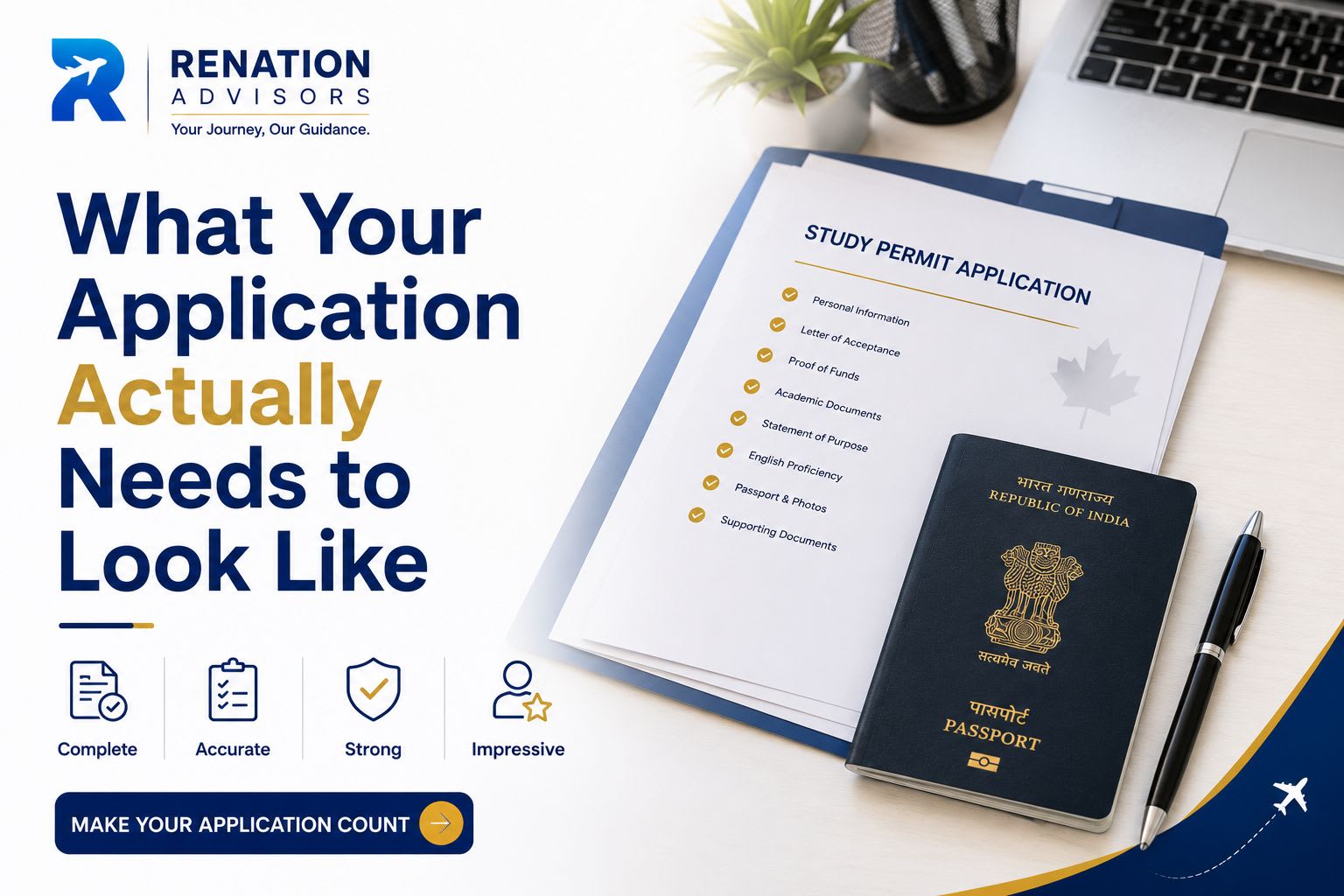
Getting a Canada study permit 2026 approved is not complicated if you approach it properly. The students who get rejected are almost always making one of three mistakes. Wrong institution, weak financials or a poorly written Statement of Purpose. Here is what to get right.
Your first step is confirming your institution is a Designated Learning Institution or DLI. Not every college in Canada is approved to host international students and picking the wrong one means your application is invalid from the start. After that comes the PAL if you are an undergraduate or diploma student. Talk to your institution about this early because Atlantic provinces like Nova Scotia and New Brunswick and Prairie provinces like Manitoba and Saskatchewan tend to have better PAL availability than Ontario and BC which are heavily oversubscribed.
Province selection matters more than it used to. If you are open to studying outside Ontario or British Columbia you will often have a smoother process and in many cases a lower cost of living too.
Your financial documents need to show two things clearly. The GIC of CAD 22,895 for living expenses deposited in a Canadian bank and proof that your first year tuition is paid or available. Your bank statements, education loan letter and GIC all need to tell a consistent story. Inconsistent or poorly organised financials are the most common reason for rejection even among applicants who genuinely have the money.
Your Statement of Purpose needs to be specific and honest. It should explain why you chose this particular program at this particular institution and what you plan to do with the degree. A generic letter that sounds like it could have been written by anyone is something visa officers see hundreds of times a day. It does not work. The letter that works is one that is clearly about you.
After your submission you need to give biometrics at a VFS Global centre. The processing time from biometrics submission is currently around 3 to 12 weeks depending on your file and the time of year. Applicants who submit in late April could receive a decision by mid-May leaving ample time for housing and flights before a September intake. If you are aiming for the September 2026 intake and you have not started yet the time pressure is real.
One more thing to confirm before you accept any offer letter. Make sure your program qualifies for the PGWP Canada after graduation. From November 2024 Canada's Post-Graduation Work Permit requires public college graduates to have studied in fields of long-term labour shortage including healthcare, STEM, trades, transport and agriculture and to meet new language thresholds of CLB 7 for university and CLB 5 for college. If your plan is to use the PGWP to build toward PR after graduation your specific program needs to qualify. Confirming this before you pay a tuition deposit is not optional.
After Graduation: The Work Permit and PR Path That Makes Canada Worth It
The reason so many Indian families choose Canada over other study destinations is not just the universities. It is what comes after the degree.
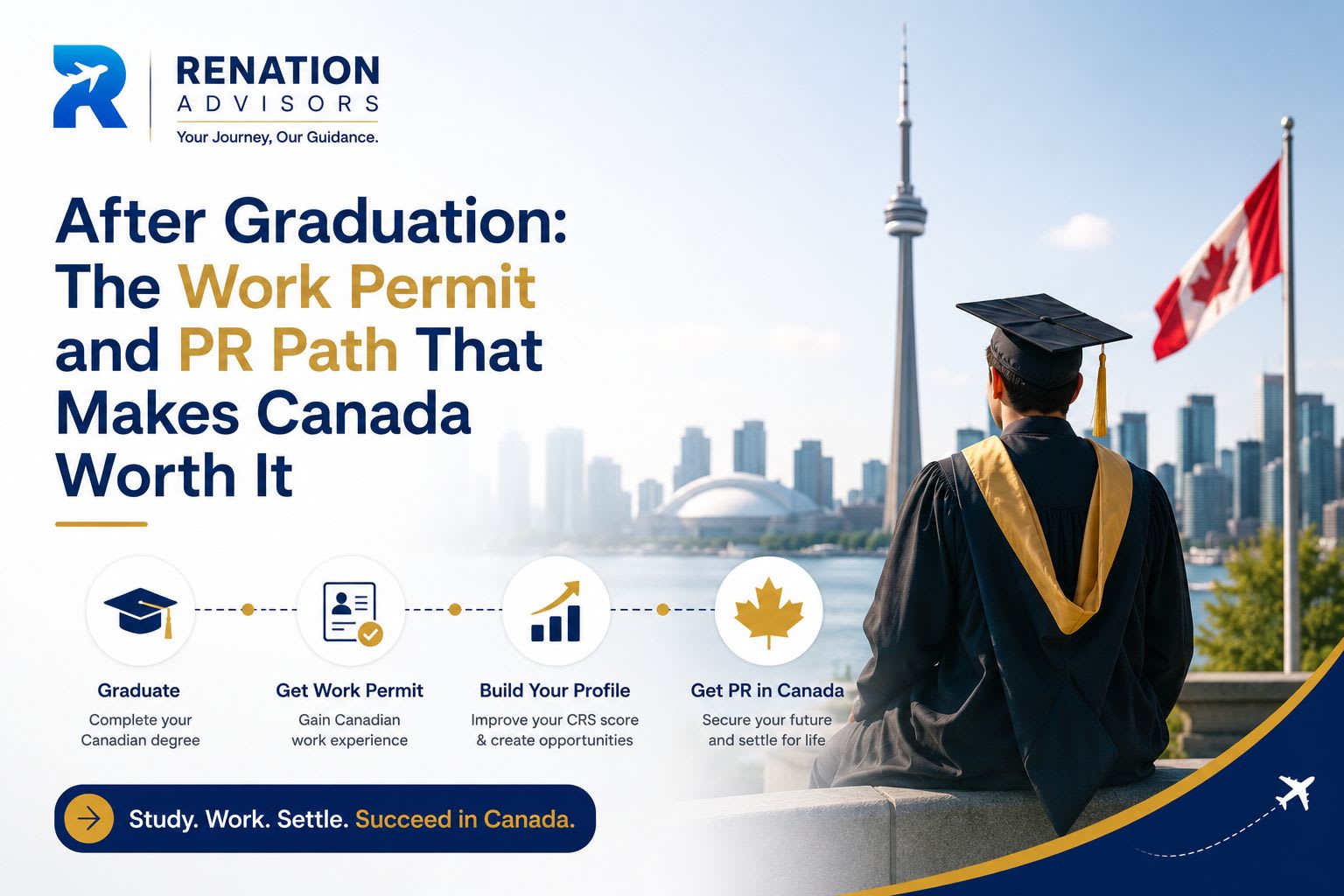
The PGWP Canada gives you the right to work anywhere in Canada for any employer for up to three years after graduation depending on how long your program was. You are not tied to a sponsor. You are not restricted to one company or one city. That freedom to build real Canadian work experience is what makes the study-to-PR pipeline so powerful.
That work experience then feeds directly into the Canadian Experience Class under Express Entry. Canadians work experience is one of the strongest inputs into a PR application. Students who go through this pipeline, degree then PGWP then Express Entry, have one of the most reliable pathways to permanent residency that exists anywhere in the world right now.
The 2026 rules are stricter. The cap is real and the competition among Indian students is intense especially for undergraduate and diploma programs. But for graduate students the path has actually become clearer and faster. And for any applicant who approaches the process with the right institution, clean financials and a properly prepared application the door is still very much open.
Conclusion
At Renation Advisors we work with students and families who are serious about making Canada happen and want to do it right the first time. We verify DLI and PGWP eligibility, help structure financial documentation, draft a Statement of Purpose that actually reflects your goals and put together an application that gives you the strongest possible shot at approval. If you are planning to apply for the September 2026 or January 2027 intake, reach out to us now. The earlier you start the more options you have.
Leave a Comment
Your email address will not be published. Required fields are marked *