
Australia Study Visa 2026: Requirements, Fees & Process
Planning to study in Australia in 2026? An Australia Study Visa can open doors to world-class education, international exposure, and exciting career opportunities. Before applying, Indian students should understand the latest student visa requirements, fees, financial proof, Genuine Student (GS) criteria, and application process. Renation Advisors provides personalised guidance and support to help students navigate their Australia study visa journey with confidence, according to their individual profiles and circumstances.
Australia Study Visa 2026: Requirements, Fees, Bank Balance, Process & PR Pathways
Planning to study in Australia in 2026? An Australia Study Visa 2026 can help Indian students access internationally recognised qualifications, practical learning opportunities, and potential career pathways. Australia offers a range of study options, including bachelor's degrees, master's degrees, vocational courses, and English-language programs.
However, before applying, students often have important questions about eligibility, tuition fees, bank balance, age limits, study gaps, and the possibility of obtaining Permanent Residency (PR) after graduation.
Understanding the latest student visa requirements is essential for preparing a strong application. Applicants must choose an eligible course and education provider, demonstrate sufficient financial capacity, meet the Genuine Student (GS) requirement, and provide the necessary documents.
In this guide, Renation Advisors explains the Australia Student Visa (Subclass 500), financial requirements, the 2026 rules, and frequently asked questions for Indian students.
What Is the Australia Study Visa (Subclass 500)?
The Student Visa (Subclass 500) lets you go to Australia and study an approved course at an eligible education provider. It covers university degrees, vocational courses, schools, and some English-language courses.
While your course is running, you can usually work up to 48 hours per fortnight. Master’s by research and doctoral students have different rules.
One thing to keep in mind: a student visa does not guarantee a job, a post-study work visa, or PR. Those depend on separate rules.
Requirements for an Australia Student Visa in 2026
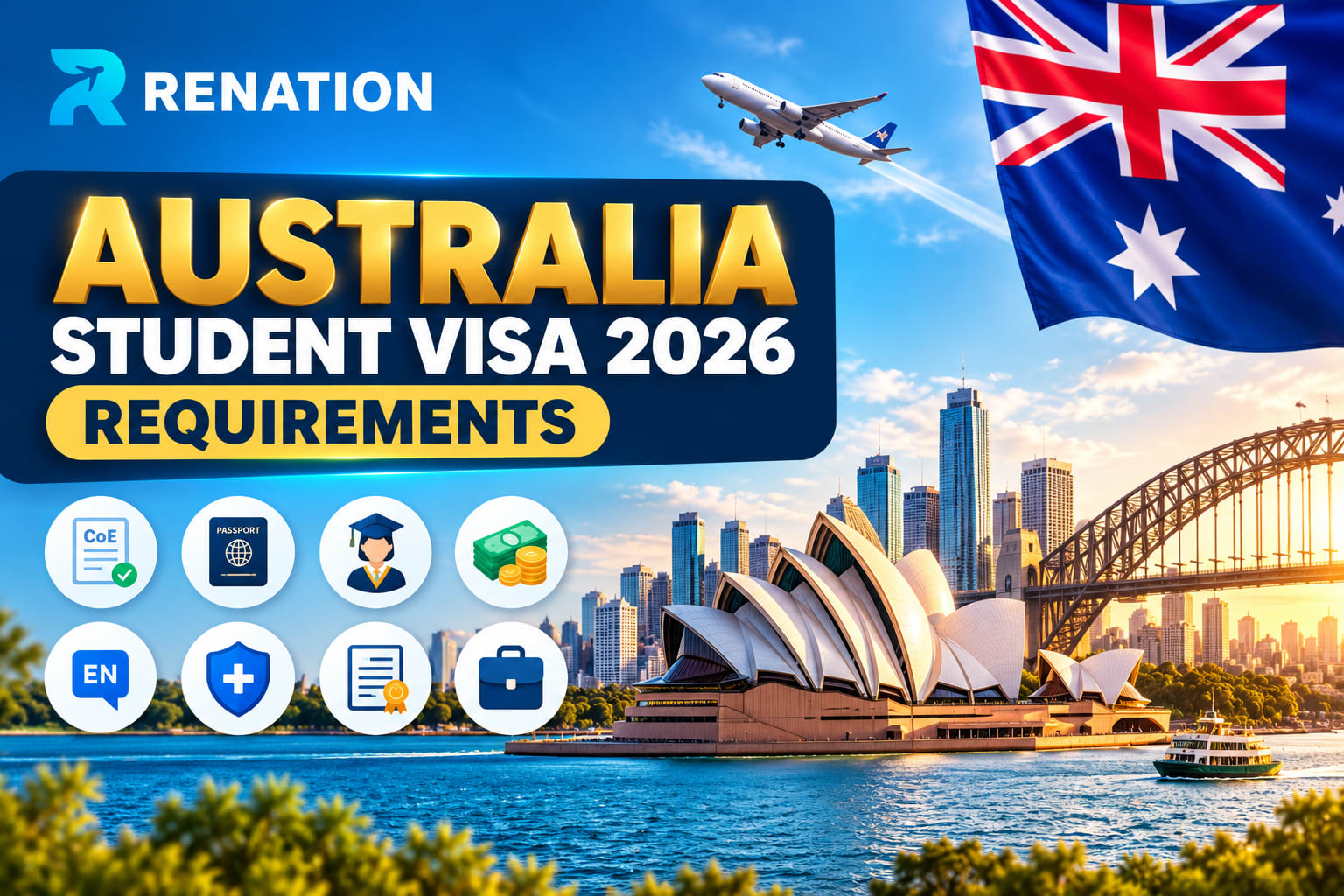
Here’s what you’ll generally need:
- Confirmation of Enrolment (CoE): from an eligible Australian education provider.
- Valid passport: with accurate personal details.
- Genuine Student (GS) requirement: you explain why you want to study this course in Australia and how it fits your future plans.
- Proof of funds: enough money for tuition, living costs, and travel.
- English test result: or proof that you’re exempt, if that applies to you.
- Overseas Student Health Cover (OSHC): health insurance for your stay.
- Academic documents: transcripts, certificates, and other education records.
- Work experience documents: if they’re relevant to your course or background.
- Health and character checks: as per Australian immigration rules.
You may be asked for more documents depending on your situation, so always check the official checklist before you apply.
What Are the New Rules for an Australia Student Visa in 2026?
The big update is from 2 October 2026. As per the Australian Government’s October 2026 update, most temporary visa holders can no longer apply for a Student Visa while they’re already in Australia, unless an exemption applies. There are also changes around including family members in certain applications. Doctoral students and some government-sponsored students are among the exemptions. People who already hold a visa, or who applied before the change, may be treated differently.
This doesn’t mean genuine international students can’t study in Australia anymore. If you’re applying from India, just check which rules apply to your own application instead of assuming every change affects you.
The basics are the same as before: you still need to meet the Genuine Student requirement, show funds when required, enrol in an eligible course, meet English requirements, and follow your visa conditions.
How Much Money Is Required to Go to Australia on a Study Visa?
Your total cost depends on your university, course, city, and lifestyle. Here’s what to plan for:
Expense | What to think about |
Tuition fees | Varies by course and institution |
Visa application fee | Check the current official fee before you apply |
Living expenses | Rent, food, transport, utilities, personal spending |
Airfare | Depends on your city and travel dates |
OSHC | Compulsory health insurance for student visa holders |
Initial setup | Accommodation deposit, supplies, and other arrival costs |
Tuition is usually the biggest cost. Medicine, specialised health courses, and engineering tend to cost more than vocational or general programs. Ask your institution for an official fee estimate and build a realistic budget before you commit.
How Much Bank Balance Is Required?
There’s no one number that works for everyone. It depends on your course fees, how long you’ll stay, your travel costs, and whether family members are coming with you.

In general, you need to show you can cover:
- Travel to Australia
- Twelve months of living costs (or a proportional amount for a shorter stay)
- Twelve months of course fees (or a proportional amount)
- School costs for any school-age dependants coming with you
The Australian Government earlier published a minimum annual living-cost figure of AUD 29,710 for the main applicant, introduced in May 2024. Please check the latest figure before you apply, because it can change. And remember, this is only the living-cost part, not your full budget. Tuition, travel, and insurance come on top.
Which Financial Documents Can Students Provide?
Depending on the rules, you can show:
- Bank statements and eligible deposits
- Education loans from recognised financial institutions
- Scholarships or other approved financial support
- Eligible parental or partner income, where it’s allowed
The money should be real, easy to access, and backed by proper documents. Large deposits you can’t explain, or details that don’t match across documents, can lead to extra questions. Also, don’t count on part-time work in Australia to meet your starting financial requirement.
What Is the Genuine Student (GS) Requirement for Australia?
The GS requirement checks whether studying is your real main reason for going to Australia. It replaced the Genuine Temporary Entrant (GTE) criterion for applications lodged from 23 March 2024.
You’ll need to explain:
- Your personal, family, work, and financial situation
- Why you picked Australia over other countries
- Why you chose this particular course and provider
- How the course connects to your earlier studies or work
- How finishing it will help your future
- Anything else that supports your application
The online form has written questions with a 150-word limit per answer. Keep your answers honest, specific, and backed by documents where needed.
For example, if you want to do a master’s in information technology, explain how it builds on what you’ve already studied or done, why you picked that institution, and how it fits a realistic career goal. A generic answer copied from the internet won’t say anything about you. The best answers are specific, consistent, and supported by real documents.
Who Is Eligible for an Australia Study Visa from India?
Indian students can apply if they meet the visa requirements and have an offer from an eligible Australian provider. This includes:
- Students who finished Class 12 and want to do an undergraduate course
- Graduates planning a master’s degree
- Students interested in vocational courses
- Working professionals who want extra qualifications or skills
- Students who want to improve their English through an eligible course
It’s not just about your nationality or education level. Your grades, English ability, finances, immigration history, course choice, and GS answers all count. Pick a course that makes sense for your background and goals, not just because you think it will lead to PR.
What Is the Age Limit for an Australia Student Visa?
There’s no fixed upper age limit for the Australian Student Visa. People of different ages can apply if they meet the requirements.
Age can still matter when you explain your course choice. A student applying right after Class 12 has a simple path. Someone going back to study after years of work may need to explain why the course helps their career. What matters is a believable study plan that fits your situation.
Can You Study in Australia After a Five-Year Gap?
Yes. A five-year gap doesn’t automatically rule you out. You just need to explain it clearly and show why studying again makes sense now.
Documents that can help:
- Employment letters and experience certificates
- Business registration or self-employment proof
- Professional training certificates
- Relevant family or financial circumstances
- A clear explanation of how the course supports your career plans
For example, if you’ve worked in accounting for five years and now want to study finance or business analytics, your work history explains the link. Never hide or twist the gap. Keep your explanation truthful and consistent with your documents.
Can You Apply After 12th?
Yes. After Class 12, you can apply for an eligible undergraduate, diploma, or vocational course, as long as you meet the institution’s entry criteria and the visa rules. Here’s what to do:
- Choose a course and provider
- Check academic entry and English requirements
- Get your offer and CoE
- Prepare your financial and academic documents
- Answer the Genuine Student questions carefully
- Arrange OSHC and submit your visa application
Think about your interests, entry requirements, total cost, and career options before you decide.
Can You Get PR in Three Years After Studying?
No one can promise that. PR is not guaranteed after three years of study or stay in Australia.
Some graduates may qualify for post-study work options or other migration routes, but it depends on the visa type and the rules at the time you apply. Possible routes include skilled migration, employer sponsorship, and state or territory nomination.
Things that can affect your options:
- Your age and the age limits for the visa
- Your occupation and skills assessment
- English ability
- Qualifications and skilled work experience
- Points test results
- State or territory nomination rules
- Employer sponsorship requirements
Choose your course for its education and career value, not for a promise of automatic PR. Check the current migration rules before making long-term plans.
How to Apply from India: Step by Step
- Choose a course. Compare institutions, course content, fees, entry criteria, and career value.
- Apply for admission. Send your academic documents, English test results if needed, and anything else the institution asks for.
- Get your CoE. Once you meet the provider’s conditions and complete enrolment, you’ll receive it.
- Prepare your documents. Passport, academic records, financial proof, OSHC details, and anything else relevant to you.
- Write your Genuine Student answers. Be honest about your study choice, situation, and plans.
- Lodge your visa application. Apply on the official Australian immigration system and pay the fee.
- Complete extra requirements. This may include biometrics, a health exam, or more documents.
- Wait for the decision. Track your application and reply to any official request on time.
Processing times vary. Don’t book non-refundable flights until your visa is granted.
Why Choose Renation Advisors for Your Australia Study Visa?

Studying abroad means a lot of decisions, from choosing the right university to preparing your finances and writing your study plan. The right guidance helps you avoid common mistakes with documents.
Renation Advisors is one of the best immigration companies in India for overseas education and immigration support. We help with course selection, admission paperwork, student visa preparation, and application planning. We can also guide you on the Australia Tourist Visa 2026 and the Australia Work Visa.
Every student’s background, finances, work history, and goals are different, so we look at your profile first and then plan the right steps with you. Get in touch to talk about your Australia Study Visa 2026 plans.
Company: Renation Advisors
Website: https://renationadvisors.com
Phone: +91 7303093805
Email: info@renationadvisors.com
Address: FLR-9 Tower D, UCP Sec-39, Gurgaon-122001, Haryana
Frequently Asked Questions
1. How much money do I need to go to Australia on a study visa?
It depends on your tuition, living costs, travel, insurance, and personal spending. You need to show the funds required under the current visa rules, which cover tuition, living expenses, and travel.
2. What are the new rules for the Australia Student Visa in 2026?
From 2 October 2026, new rules apply to applications made from inside Australia and to including family members in certain applications. Some groups are exempt. If you’re applying from India, check the current Subclass 500 rules for your case.
3. How much bank balance is required for the Australia Study Visa?
There’s no single amount. It depends on the living-cost requirement, your tuition fees, travel costs, and any dependents coming with you. Check the official financial evidence rules before you apply.
4. Can I get PR in Australia in three years?
Possibly, if you qualify under an available migration pathway, but it’s never guaranteed. Finishing a course doesn’t automatically make you eligible. Skilled migration, employer sponsorship, and nomination each have their own conditions.
5. What are the requirements for the Australia Student Visa in 2026?
You’ll usually need an eligible course and provider, a CoE, enough funds, Genuine Student answers, OSHC, and to meet the English, health, and character requirements.
6. Who is eligible for the Australia Study Visa from India?
Indian students who meet the entry and visa criteria. This includes Class 12 graduates, university graduates, and others admitted to suitable courses.
7. What is the age limit for the Australia Student Visa?
There’s no universal upper age limit. Just show that your course fits your education, work experience, and future plans.
8. Can I study in Australia after a five-year gap?
Yes. Explain the gap honestly and back it up with things like job records or training certificates.
9. Can I apply for the Australia Student Visa after 12th?
Yes. Class 12 graduates can apply for eligible undergraduate, diploma, or vocational courses if they meet the institution’s and the visa’s requirements.
10. What is the Genuine Student requirement?
It checks whether studying is your real main purpose for going to Australia. You answer questions about your situation, course, provider, and the benefits you expect.
Conclusion
An Australia Study Visa in 2026 can provide Indian students with access to international education and valuable academic experiences. However, a successful application requires careful course selection, realistic financial planning, accurate documentation, and a convincing explanation of why the proposed study is appropriate.
Before applying, check the latest government requirements, especially the financial capacity rules and the student visa changes introduced in October 2026. Remember that a student visa does not guarantee employment or Permanent Residency.
Renation Advisors is one of the best immigration companies in India, and we help students navigate different situations and conditions with guidance and support throughout their overseas education journey. Contact our team to discuss your profile and plan your Australia Study Visa application.
Leave a Comment
Your email address will not be published. Required fields are marked *